

As modern industries continue to demand higher thermal efficiency, durability, and compact heat exchanger designs, Welded B-Type Tubes for Radiators have emerged as one of the most reliable solutions in radiator manufacturing. Their unique structure, excellent heat transfer performance, superior corrosion resistance, and long service life make them increasingly popular across automotive, industrial, power generation, and HVAC applications.
In this article, we will explore how Welded B-Type Tubes for Radiators work, their manufacturing process, advantages, applications, material options, and why manufacturers worldwide trust companies like Sinupower for high-performance thermal management solutions.
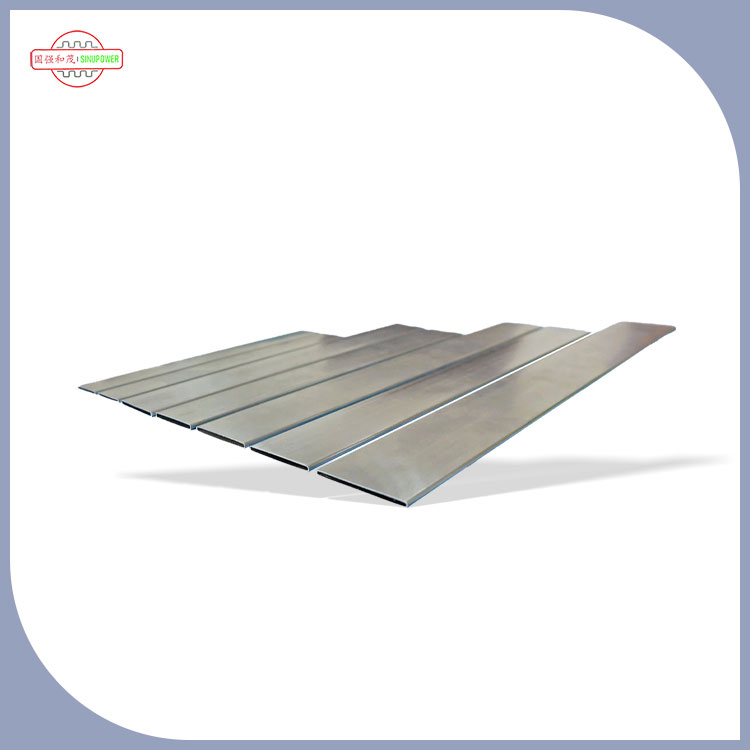
Welded B-Type Tubes for Radiators are specially engineered heat transfer tubes designed to maximize thermal conductivity while maintaining structural strength. Their distinctive "B" shaped internal profile creates optimized coolant flow channels, improving heat dissipation compared to conventional round or flat tubes.
These tubes are widely used in radiator cores, condensers, intercoolers, oil coolers, and various heat exchanger systems where efficient thermal management is critical.
The welded construction provides enhanced mechanical stability and dimensional accuracy, making them suitable for demanding operating environments involving vibration, pressure fluctuations, and temperature extremes.
Heat transfer efficiency depends on several factors, including surface area, coolant flow characteristics, material conductivity, and tube geometry.
The innovative design of Welded B-Type Tubes for Radiators provides:
By optimizing fluid dynamics within the tube, engineers can achieve greater cooling performance without increasing radiator size. This is particularly valuable in modern automotive and industrial systems where compactness and efficiency are essential.
Traditional radiator tubes often rely on simple flat or round profiles. While these designs have served the industry for decades, they may not provide the thermal efficiency required by modern applications.
The unique B-shaped configuration creates multiple internal flow paths that improve coolant interaction with the tube walls.
| Feature | Traditional Tube | Welded B-Type Tube |
|---|---|---|
| Flow Distribution | Basic | Optimized |
| Heat Transfer Efficiency | Moderate | High |
| Pressure Resistance | Standard | Excellent |
| Structural Strength | Medium | High |
| Weight Optimization | Limited | Improved |
| Service Life | Good | Extended |
This structural innovation helps radiator manufacturers meet increasingly strict performance requirements.
Producing high-quality Welded B-Type Tubes for Radiators requires precision engineering and advanced manufacturing technologies.
The typical production process includes:
Advanced welding techniques ensure strong seam integrity while maintaining optimal thermal conductivity. Strict dimensional control is essential because even minor variations can affect radiator performance.
Material selection plays a critical role in determining radiator efficiency and lifespan.
Common materials include:
Among these options, aluminum remains the most popular due to its excellent combination of:
Many premium manufacturers such as Sinupower utilize advanced aluminum alloy formulations to maximize radiator performance while minimizing overall system weight.
The growing adoption of Welded B-Type Tubes for Radiators can be attributed to several significant advantages.
The optimized internal geometry increases contact between coolant and tube surfaces, improving thermal exchange rates.
The welded structure enhances durability under high-pressure operating conditions.
Manufacturers can achieve higher cooling performance without increasing radiator size.
In automotive applications, lighter and more efficient radiators contribute to reduced fuel consumption.
High-quality welded tubes resist fatigue, vibration, and thermal cycling.
Enhanced durability reduces downtime and maintenance costs throughout the product lifecycle.
Choosing the right tube design significantly impacts radiator performance.
| Performance Indicator | Traditional Tube | Welded B-Type Tube |
|---|---|---|
| Cooling Efficiency | Good | Excellent |
| Pressure Capability | Moderate | High |
| Weight Reduction | Average | Better |
| Flow Optimization | Limited | Advanced |
| Product Lifetime | Standard | Longer |
| System Compactness | Average | Superior |
For industries focused on performance optimization, Welded B-Type Tubes for Radiators often provide a clear competitive advantage.
These advanced heat transfer tubes serve a wide range of industries.
As thermal management requirements become more demanding, the use of Welded B-Type Tubes for Radiators continues to expand.
When selecting radiator tube suppliers, quality assurance is often one of the most important considerations.
Sinupower focuses on:
By maintaining high production standards, Sinupower delivers Welded B-Type Tubes for Radiators that meet the performance expectations of global radiator manufacturers.
Their commitment to innovation and consistency helps customers improve heat exchanger performance while maintaining cost competitiveness.
Several emerging trends are shaping the future of heat transfer tube development.
As electric vehicles, renewable energy systems, and advanced industrial equipment continue to evolve, radiator technology must deliver greater efficiency within increasingly compact spaces.
Welded B-Type Tubes for Radiators are expected to remain at the forefront of this technological evolution due to their ability to combine thermal performance, durability, and design flexibility.
They are primarily used in radiators, condensers, intercoolers, oil coolers, and heat exchanger systems that require efficient heat transfer and high structural reliability.
Their internal geometry improves coolant flow distribution and increases heat transfer efficiency by creating more effective thermal exchange surfaces.
Aluminum alloys are the most common due to their lightweight properties, corrosion resistance, and excellent thermal conductivity.
Yes. Their compact design and high cooling efficiency make them highly suitable for EV battery cooling and thermal management systems.
With proper material selection and manufacturing quality, they can provide many years of reliable service even under demanding operating conditions.
Sinupower offers advanced manufacturing capabilities, strict quality control, reliable product consistency, and extensive experience in heat transfer tube production.
The increasing demand for compact, efficient, and durable cooling systems has made Welded B-Type Tubes for Radiators an essential component in modern heat exchanger technology. Their superior heat transfer performance, structural strength, corrosion resistance, and adaptability across multiple industries provide clear advantages over conventional tube designs. As radiator technology continues to advance, these innovative tubes will play an even more important role in improving thermal management efficiency worldwide.
If you are looking for high-quality Welded B-Type Tubes for Radiators backed by professional manufacturing expertise and reliable performance, Sinupower is ready to support your project. Whether you need customized solutions, technical consultation, or volume production capabilities, contact us today to discover how our advanced radiator tube technologies can help improve your products, reduce costs, and enhance overall heat exchanger performance.


