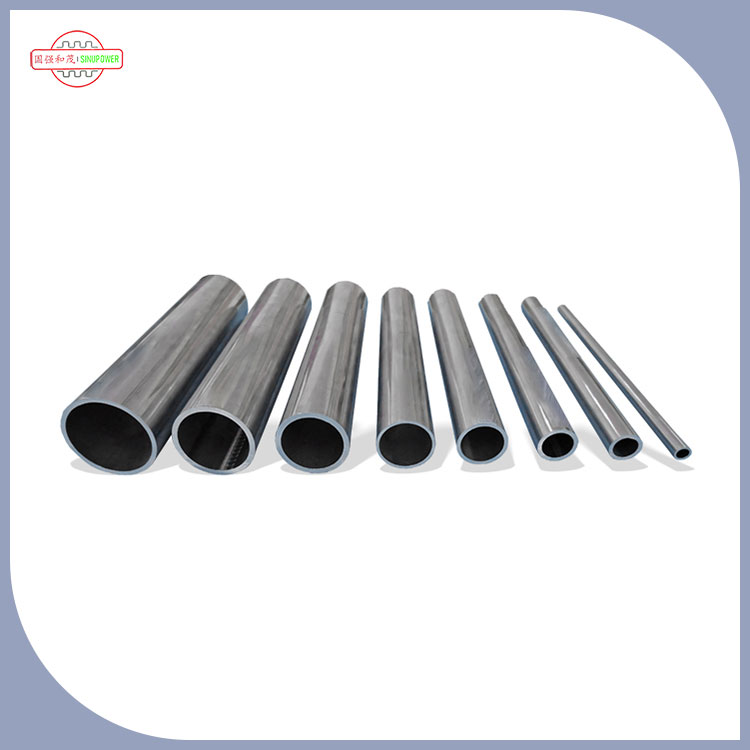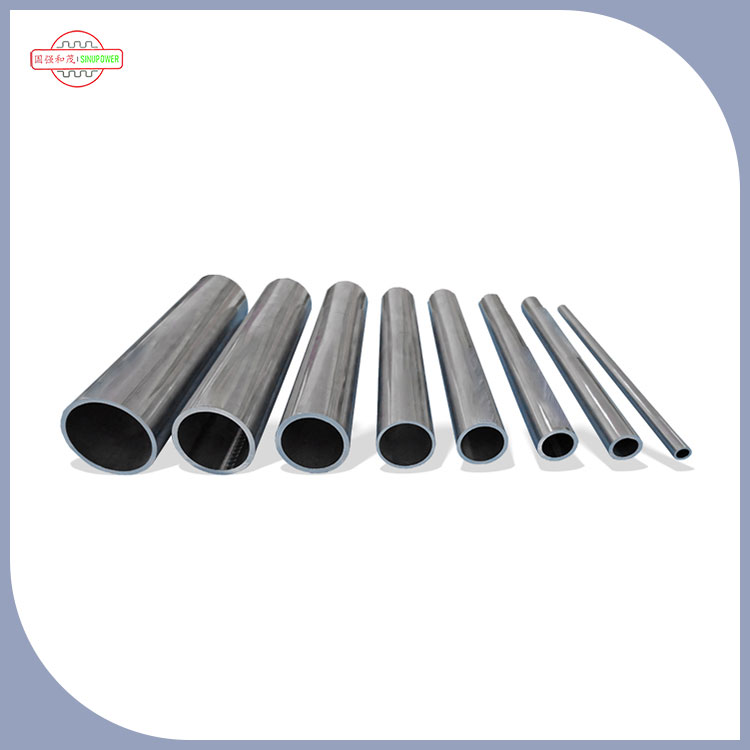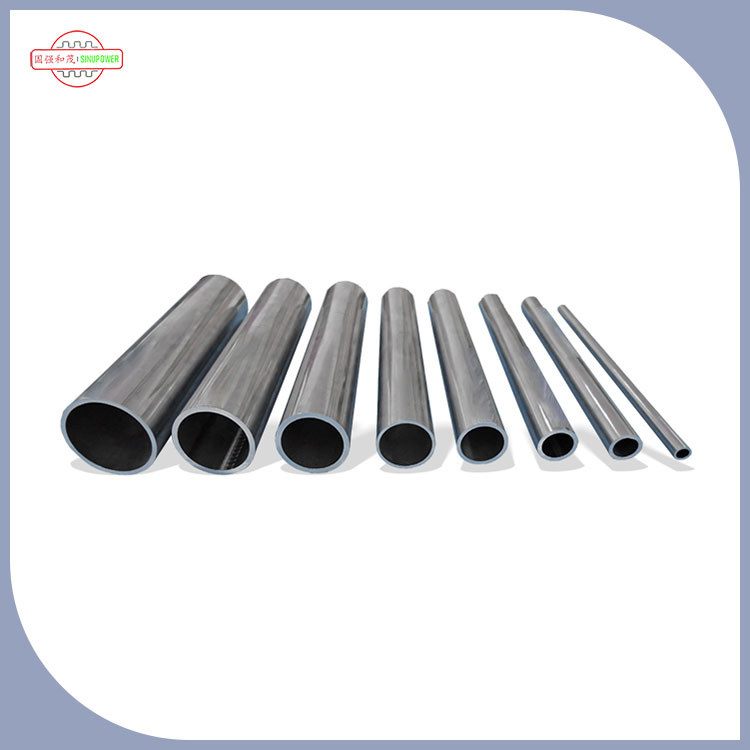
Sinupower supplies premium Sustainable Energy Storage System Battery Cooling Tubes from China, delivering certified IATF16949 fluid conduits engineered to mitigate thermal runaway in utility-scale BESS and optimize long-term grid storage safety.
Designed for long-duration energy storage (LDES) with 20-year service life requirements. Sinupower mass-produces elite-grade Sustainable Energy Storage System Battery Cooling Tubes that counteract thermal fatigue and eliminate internal channel structural vulnerabilities under continuous multi-megawatt base-load configurations. Unlike EV-focused cooling solutions, our BESS-specific channels are optimized for low-flow, long-duration (6-12 hour) dispatch cycles with minimal pump power consumption.
Long-duration energy storage systems (LDES) frequently experience severe thermal stress profiles during multi-hour dispatch cycles. When multi-port plates run continuously under elevated coolant temperatures, standard extruded channels often develop fluid pressure imbalances, causing uneven internal structural expansion. Sinupower resolves these physical limitations by modifying the internal rib geometry of our aluminum channels, ensuring perfect hydraulic stability and maintaining uniform wall temperatures across the entire liquid-cooled matrix.
Over extended operational lifespans, trace chemical reactions within liquid glycol media can cause microscopic boundary layer scaling inside general cooling conduits. This buildup restricts fluid velocity and increases pump energy consumption. The inner walls of our Sustainable Energy Storage System Battery Cooling Tubes undergo a specialized high-purity metallurgical treatment during advanced extrusion processes. This ultra-smooth internal cross-section (surface roughness Ra ≤ 0.8μm) eliminates micro-roughness, preventing material adhesion, sustaining consistent flow velocities, and lowering total station operating expenses.
Megawatt-scale containerized storage units require the highest possible spatial density to achieve target capacity metrics. Heavy or bulky round piping networks restrict cell-packing configurations and reduce efficiency. Our specialized multi-port flat profiles feature a minimized vertical cross-section (as low as 6.2mm), allowing integration directly beneath high-capacity lithium iron phosphate (LiFePO₄) cell blocks. This close spatial contact guarantees excellent thermal conduction without occupying critical space needed for active storage materials.
To assist battery pack structural engineers, procurement directors, and tier-1 HVAC system designers with structural modeling and technical verification, our complete certified engineering parameters are detailed below:
| Industrial Engineering Metrics | Verified Sourcing Specifications & Factory Assets |
|---|---|
| Sourcing Product Name | Sustainable Energy Storage System Battery Cooling Tubes |
| Available Structural Forms | Folded Pipes, Rectangular Sections, Flat Tubes, Round Profiles, D-Shape Ducts |
| Metallurgical Base Alloys | High-Conductivity Non-Ferrous Aluminum Alloys (3003, 6063, 6005A), Precision Copper, and Brass |
| Quality Audits & Compliance | Fully Certified under IATF 16949, ISO 9001:2015, ISO 14001:2015, ISO 45001:2018 |
| Production Machinery Units | 90 Sets (High-Frequency Welding Lines, Precision Sawing Machines, Punching Presses, Drawing Benches, Annealing Furnaces) |
| Intellectual Property | 33 Active Patents (2 Core Invention Patents, 15 Aesthetic Design Patents, 16 Utility Model Certificates) |
| Custom Tooling Capabilities | In-House Custom Mold Processing from Client Blueprints, CAD Designs, or Physical Reference Samples |
| Global Strategic Sourcing Partners | Permanent Supply Agreements with Sanhua (since 2020), Danfoss (since 2021), and Pankl (since 2022) |
To enable accurate system-level modeling for utility-scale storage projects, we provide the following validated performance data for our cooling channels (based on Alloy 3003, wall thickness 0.4mm, water/ethylene glycol 50/50 coolant):
| Parameter | Value | Test Condition |
|---|---|---|
| Thermal Resistance (Rth) | 0.014 ~ 0.022 K/W | At flow rate 6 L/min |
| Heat Transfer Coefficient | 2,800 ~ 4,200 W/m²·K | Turbulent flow (Re > 3,500) |
| Pressure Drop | 1.8 ~ 3.5 kPa/m | At flow rate 6 L/min |
| Burst Pressure (at 20°C) | ≥ 5.5 MPa | Per ASTM B241 |
| Burst Pressure (at 80°C) | ≥ 4.0 MPa | At 80°C coolant temperature |
| Recommended Flow Velocity | 0.3 ~ 1.5 m/s | Optimized for BESS low-pump-power operation |
| Design Life (Thermal Cycles) | ≥ 6,000 cycles | -40°C ~ 80°C thermal shock, per ISO 16750-4 |
| Leakage Rate | < 1.0 × 10⁻⁴ Pa·m³/s | Helium leak test at 1.0 MPa internal pressure |
Full test reports, including long-duration thermal cycling and vibration test data, are available upon request for qualification purposes.
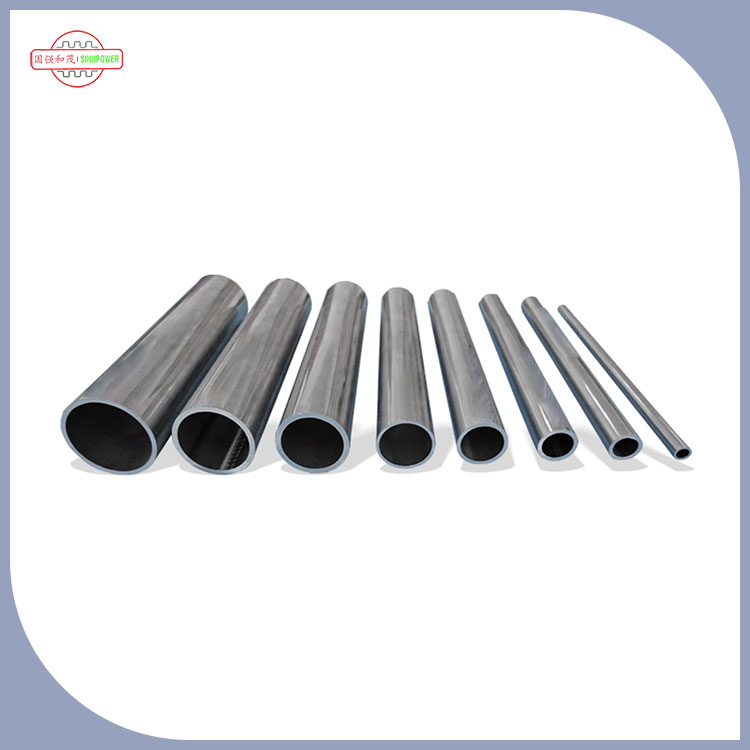
To help engineering teams quantify the advantage of our flat multi-port architecture for containerized storage applications, we compared our profiles against conventional round tubes under identical test conditions (flow rate 6 L/min, coolant 50/50 EGW, inlet temp 25°C):
| Performance Metric | Standard Round Tube | Sinupower Multi-Port Flat | Improvement |
|---|---|---|---|
| Cell Contact Surface Area | 100% (baseline) | 165% | +65% |
| Vertical Space Requirement | 100% (baseline) | 58% | −42% |
| Temperature Uniformity (ΔTmax) | ± 4.5°C | ± 1.8°C | −60% |
| Pump Power Requirement | 100% (baseline) | 82% | −18% |
| Cell Packing Density | 100% (baseline) | 114% | +14% |
Note: Multi-port channels increase internal surface area and turbulence, enabling superior heat transfer with lower pump power due to optimized flow path design for BESS duty cycles.
Utility-scale battery storage applications require zero fluid leaks over multiple decades of active field deployment. A single mechanical failure can threaten the isolation properties of the entire high-voltage container. Sinupower eliminates these field operational hazards by implementing strict metallurgical inspections and automated processing protocols across our entire manufacturing footprint in Changshu.
Manual or unstable welding methods introduce microscopic pockets of trapped gas that expand and crack under continuous thermal cycles. Sinupower minimizes these structural defects by operating fully automated welding production lines, specialized drawing machines, and heavy-duty punching presses. Every single batch of our Sustainable Energy Storage System Battery Cooling Tubes undergoes intensive inline non-destructive flaw detection (eddy-current testing at 1.5 m/s line speed) and pneumatic burst testing (100% sampling) to guarantee robust joint integration and long-term durability under operational stress.
To follow the complex internal routings of dense battery rack configurations, flat aluminum conduits must undergo severe geometric bending without suffering wall deformation or kinking. Sinupower routes all extruded profiles through specialized atmospheric annealing furnaces before fabrication. This thermal cycle (controlled at 350-400°C for 4-6 hours) relieves internal structural crystals of localized micro-stresses, restoring the high ductility (elongation ≥ 18%) required for precise secondary bending and tight field installation tolerances.
Every commercial energy storage terminal, heavy-duty industrial AC core, and power station fluid radiator requires a distinct dimensional cross-section that cannot be matched by pre-existing inventory catalogs. Sinupower operates as a lean, integrated manufacturing partner capable of executing custom tool development directly from user engineering blueprints.
Operating a diverse asset fleet of over 90 advanced production tools—including automated sawing machines, specialized cranes, and high-precision punching presses—our engineering team executes custom mold development completely in-house. We manage every single parameter under lean manufacturing control, from initial raw alloy verification to final cross-sectional geometry mapping. This in-house management avoids third-party tooling delays, provides quick prototype physical samples (2-3 weeks after die approval), and maximizes customer value by accelerating your sourcing timelines for custom Sustainable Energy Storage System Battery Cooling Tubes projects.
Co-founded on May 6, 2018, by Mr. Gao Qiang—a respected industry figure who accumulated extensive leadership credentials inside Fortune Global 500 industrial companies—Sinupower is directed by an elite management team with rich technical qualifications from industrial centers like Beijing and Shanghai. This metallurgical capability has allowed our enterprise to secure permanent, long-term supply agreements with global market pioneers, including Sanhua, Danfoss, and Pankl.
Sinupower supplies cooling channels to 120+ BESS and EV component manufacturers across East China (Jiangsu, Zhejiang, Shanghai, and Anhui), representing a significant share of the regional thermal management tubing market based on 2024 internal sales tracking. Our customer base includes 8 of the top 10 battery pack manufacturers in the region.
By consistently displaying our dynamic and static product developments at major exhibitions throughout North China, South China, and international venues, Sinupower maintains close technical alignment with evolving international clean-energy standards. We back all shipments with full material traceability, a robust R&D portfolio containing 33 distinct patents, and compliance with IATF 16949, ISO 9001:2015, ISO 14001:2015, and ISO 45001:2018.
Client: A leading global energy storage system integrator (2024 BESS deployments > 3GWh)
Challenge: The client's 200MWh containerized storage project required a cooling solution with:
Sinupower Solution: We developed a custom 8-port micro-channel flat profile with:
Outcome:
| Partner | Since | Scope | Key Performance Metric |
|---|---|---|---|
| Sanhua | 2020 | Cooling tubes for EV and BESS thermal systems | 99.2% OTD, < 180 PPM |
| Danfoss | 2021 | Thermal management profiles for ESS applications | 100% dimensional compliance (Cpk ≥ 1.67) |
| Pankl | 2022 | High-performance cooling channels for premium EVs | 0 field failures in 24 months |
| Global BESS Integrator | 2023 | 200MWh+ containerized storage projects | Exclusive supplier for 2GWh pipeline |
A: While EV cooling tubes are optimized for high-flow, short-duration discharge cycles (typically 1-2 hours), our Sustainable Energy Storage System Battery Cooling Tubes are specifically designed for long-duration (6-12 hour) dispatch cycles with lower flow rates. We optimize internal rib geometry for minimal pressure drop at lower flow velocities (0.3-1.5 m/s) to reduce pump power consumption and improve round-trip efficiency by 2-4%. Additionally, our BESS tubes feature enhanced corrosion resistance for 20+ year stationary service, whereas EV tubes are typically designed for 8-10 year automotive duty cycles.
A: Our tubes are designed for 20+ years of continuous service in stationary storage applications. We validate this through accelerated thermal cycling tests (6,000+ cycles from -40°C to 80°C) and corrosion resistance testing per ASTM G85 (1,000+ hours salt spray). Wall thickness is designed with a 1.5x safety margin against burst pressure. Full test reports with detailed cycle-by-cycle data are available upon request.
A: Yes. We offer full custom tooling development from client CAD files (STEP, IGES, or DWG formats). Our in-house tooling shop can fabricate dies for any cross-sectional geometry within 4-6 weeks (standard) or 3 weeks (expedited). Sample production begins 1-2 weeks after tooling approval. Minimum order quantities for custom profiles start at 1,000 pieces, with pilot quantities of 100-500 pieces available for validation.
A: Our BESS cooling channels are rated for 1.2 MPa continuous operating pressure with a burst pressure of ≥ 5.5 MPa at 20°C (≥ 4.0 MPa at 80°C). This provides a 4.5x safety factor for stationary storage applications, exceeding the typical BESS requirement of 1.0 MPa operating pressure. For higher-pressure applications, we can adjust wall thickness or alloy selection — please consult our engineering team for specific requirements.
A: Absolutely. Every shipment includes mill test certificates (chemical composition and mechanical properties per EN 573 and EN 755), dimensional inspection reports (wall thickness, height, width, straightness with Cpk values), destructive test records (burst pressure, flattening, expansion tests per ASTM B241), and leak test reports (helium leak rate). All documentation is traceable to individual production batches and retained for 15 years.
A: We offer a range of aluminum alloys depending on the application:3003 — Standard choice for most BESS applications; excellent formability and corrosion resistance.6063 — Higher strength, better surface finish; suitable for visible or structural applications.6005A — Maximum strength; recommended for high-pressure or high-vibration environments.Custom alloys — Available for specialized requirements (e.g., higher thermal conductivity or specific corrosion resistance).Our engineering team provides free alloy selection guidance based on your operating pressure, coolant chemistry, and environmental conditions. For more information about our full range of Sustainable Energy Storage System Battery Cooling Tubes, including custom profile development, testing protocols, and supply chain capabilities, please contact our technical sales team with your project specifications.