

Sinupower Heat Transfer Tubes Changshu Ltd. has been studying Hourglass Tubes for Radiators in relation to flow stability and thermal behavior in compact heat exchange systems, where geometry directly reshapes how heat and fluid interact inside a tube network.
In recent years, the discussion around tube geometry in thermal systems has moved beyond simple shape selection into deeper questions of physics-driven performance. Among these geometries, the hourglass profile has drawn attention because it appears simple, yet it changes multiple interacting variables at once—flow velocity, pressure distribution, turbulence patterns, and surface exposure. Instead of acting as a passive channel, the tube becomes an active part of the heat exchange mechanism.
The defining feature of Hourglass Tubes is the narrowed middle section. This "waist" is not just a structural variation; it alters how fluid behaves at a fundamental level.
When fluid enters the wider inlet section, it slows slightly, then accelerates as it passes through the constricted mid-zone, before expanding again at the outlet. This continuous acceleration and deceleration cycle creates a dynamic flow profile that is very different from straight cylindrical tubes.
From a practical perspective, this shape introduces controlled instability—enough to improve mixing, but not enough to cause disruptive turbulence losses.
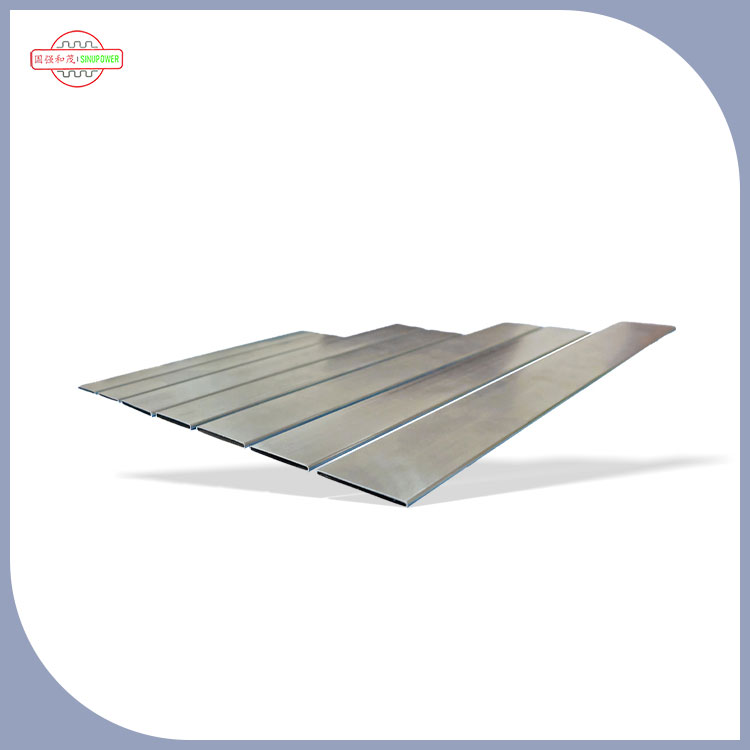
The relationship between velocity and pressure is central to understanding why this geometry is effective. As fluid moves into the narrower section:
- Velocity increases
- Static pressure decreases
- Local kinetic energy rises
Once the fluid exits the constriction, the reverse occurs. This repeated pressure cycling helps break up thermal boundary layers that typically cling to internal tube walls.
Another subtle effect is the change in how fluid "contacts" the internal surface. In uniform tubes, fluid layers can become stratified, limiting interaction between the core flow and the wall. The hourglass shape disrupts this layering, increasing contact frequency and improving heat transfer consistency.
The physics of Hourglass Tubes for Radiators can be explained using simplified fluid dynamics principles without requiring advanced mathematical modeling.
The continuity principle states that for incompressible flow:
Cross-sectional area × velocity = constant
When the tube narrows at the center, the fluid must accelerate to maintain flow rate. This acceleration is not just a numerical change—it modifies how energy is distributed across the flow field.
Bernoulli's principle helps explain the energy shift:
- In wider sections: higher pressure, lower velocity
- In narrow waist: lower pressure, higher velocity
This alternating energy state helps improve thermal exchange because it constantly reshapes how heat is transported between fluid layers.
While the flow may appear smooth macroscopically, small-scale disturbances form at the transition zones between wide and narrow sections. These micro-eddies:
- Reduce stagnant thermal zones
- Increase mixing efficiency
- Refresh boundary layers more frequently
The result is a more active thermal interface without requiring external mechanical agitation.
In heat exchange systems, efficiency is often limited not by material conductivity alone, but by how effectively heat can move from fluid to surface and then into the surrounding medium.
The geometry of Hourglass Tubes for Radiators directly addresses this limitation.
| Feature | Straight Tube Behavior | Hourglass Tube Behavior |
| Flow pattern | Uniform, laminar-dominant | Alternating acceleration zones |
| Boundary layer | Stable and thicker | Frequently disrupted |
| Heat exchange consistency | Moderate | More uniform along length |
| Pressure behavior | Stable drop | Cyclical variation |
| Mixing effect | Limited | Enhanced micro-mixing |
This table shows that the advantage is not a single factor, but a combination of multiple interacting physical changes.
In practical thermal systems, this leads to more stable temperature control under fluctuating load conditions, especially in environments where heat input is not constant.
It is often assumed that material choice dominates thermal performance. However, geometry can be equally influential.
A key limitation in many thermal systems is the boundary layer—a thin region near the tube wall where fluid moves slowly. This layer acts as a thermal barrier.
The waist constriction periodically destabilizes this layer. As fluid accelerates through the narrow region, shear forces increase, thinning the boundary layer and improving heat transfer rates.
After passing the constriction, the flow expands again. This expansion creates localized flow separation and reattachment, which "re-energizes" the fluid near the wall. The repeated cycle improves overall thermal consistency.
Sinupower Heat Transfer Tubes Changshu Ltd. applies different materials such as aluminum alloys, copper, and composite metal structures depending on system requirements.
Material selection influences:
- Thermal conductivity
- Structural stability under pressure cycling
- Resistance to deformation at transition zones
In Hourglass Tubes for Radiators, the constricted region experiences slightly higher mechanical stress due to velocity changes. Therefore, structural resilience at the waist is a critical design factor.
To better understand the physical differences, it helps to compare flow behavior patterns:
Straight tube flow:
- Predictable velocity profile
- Minimal disturbance
- Stable but less interactive thermal exchange
Hourglass tube flow:
- Repeated acceleration and deceleration
- Active mixing at geometric transitions
- Enhanced wall interaction
- More dynamic thermal profile
This does not imply that one structure replaces another universally, but it explains why certain thermal systems benefit from more complex internal geometries.
Hourglass-shaped tubes are increasingly considered in systems where space efficiency and thermal responsiveness are both important.
Typical application environments include:
- Automotive thermal regulation units
- Industrial cooling loops
- Compact air conditioning heat exchangers
- Energy system cooling assemblies
- Building climate control systems
In each case, the goal is not only heat removal, but stable thermal balancing under varying loads.
One of the less visible aspects of tube engineering is how small geometric changes affect system-level stability.
Even slight adjustments to:
- Waist depth
- Transition curvature
- Length of constricted zone
can shift the balance between laminar flow and controlled turbulence. This means that design optimization is often iterative rather than static.
The engineering team at Sinupower Heat Transfer Tubes Changshu Ltd. has explored multiple structural variations to align flow behavior with different operational demands.
The increasing focus on compact thermal systems has pushed engineers to rethink traditional straight-channel designs. Instead of simply increasing surface area or flow rate, modern approaches focus on shaping flow behavior itself.
The hourglass structure represents this shift: it uses geometry to actively influence fluid motion rather than passively containing it.
This approach aligns with broader trends in thermal engineering where efficiency is achieved through interaction design rather than brute-force scaling.
The physics behind waist constriction in tube geometry shows that small structural variations can significantly influence flow behavior, heat transfer consistency, and system stability. By combining pressure cycling, boundary layer disruption, and controlled micro-mixing, Hourglass Tubes for Radiators provide a distinctive approach to thermal management challenges in compact systems.
Within this context, Sinupower Heat Transfer Tubes Changshu Ltd. continues to explore how refined tube structures can support evolving thermal requirements across different engineering environments, with Hourglass Tubes playing a notable role in this ongoing development of precision heat exchange solutions.


