

Sinupower explores how Rectangular Tubes behave during cutting, drilling, and welding processes in modern fabrication environments, where geometry and material response directly influence precision and structural reliability in downstream applications.
In fabrication workshops, rectangular hollow profiles are often treated as straightforward structural elements, but the reality is more nuanced. Their flat surfaces, sharp corners, and variable wall thickness behavior introduce unique challenges when compared with circular profiles. Each stage—cutting, drilling, and welding—requires careful control of stress, heat, and deformation to maintain dimensional accuracy and functional stability.
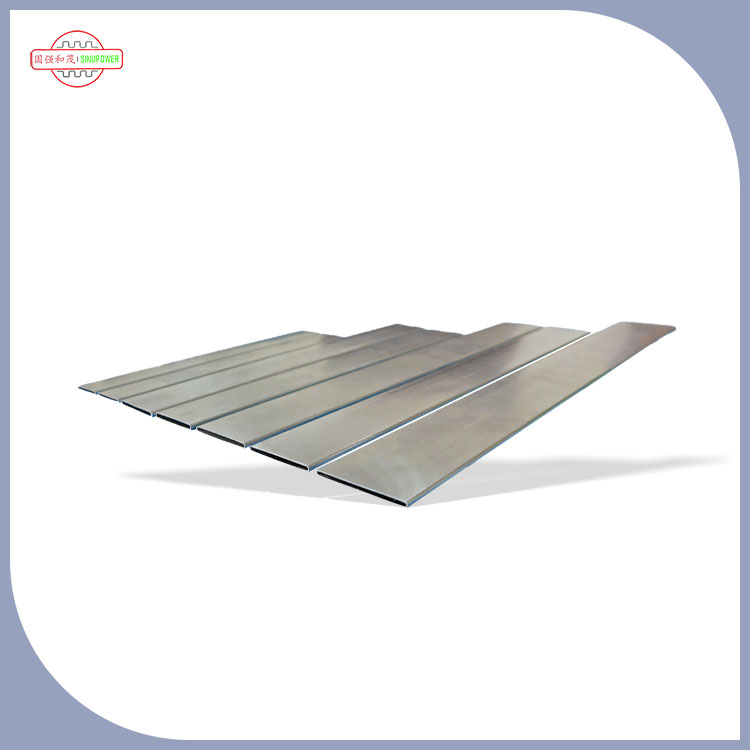
Rectangular Tubes are widely used in systems where space efficiency and load distribution matter. However, their geometry creates uneven stress concentration points, especially at corners.
Unlike round tubes, where forces distribute evenly along the curvature, rectangular profiles concentrate stress along edges. This characteristic becomes especially important during fabrication processes, where mechanical force and thermal input can alter structural integrity if not properly controlled.
The rectangular shape introduces three key engineering effects:
- Corner stress amplification
- Uneven heat distribution during welding
- Direction-dependent stiffness
These effects influence how each fabrication step is planned and executed.
Cutting is the first step where Rectangular Tubes begin to show geometry-dependent behavior. Whether using mechanical saws, abrasive systems, or thermal cutting methods, the material reacts differently along flat surfaces versus corners.
In mechanical cutting:
- Flat surfaces allow stable blade contact
- Corners tend to generate vibration spikes
- Burr formation is more likely at edge exits
The rigidity of rectangular sections means cutting forces are not evenly absorbed, requiring controlled feed rates to avoid distortion.
When thermal methods are used, localized heating introduces expansion differences across the tube wall. Because rectangular geometry has multiple thermal pathways, heat dissipates unevenly, sometimes causing slight warping if cooling is not balanced.
Drilling introduces one of the most interesting interactions between tool force and material geometry. The flat faces of Rectangular Tubes allow stable tool entry, but internal stress distribution changes as the drill penetrates.
During drilling:
- Initial contact is stable due to flat surface support
- Mid-penetration creates chip accumulation zones
- Exit phase often generates deformation risk
The exit side is particularly sensitive because material support is reduced, leading to potential burr formation or slight ovalization of holes.
As the drill advances, stress redistributes along the tube walls. Corners can either absorb or reflect stress depending on thickness and material composition. This makes drilling consistency dependent on both feed control and cooling strategy.
Welding is where Rectangular Tubes show their most complex physical response. The combination of heat input and geometric constraint leads to localized expansion, contraction, and residual stress formation.
Unlike circular sections that allow smoother heat diffusion, rectangular profiles concentrate thermal energy along weld seams and corners. This creates:
- Uneven cooling rates
- Localized distortion near joints
- Residual stress accumulation along edges
As the welded area cools, contraction forces pull unevenly across flat panels. This can lead to slight bowing or angular distortion if not balanced through controlled sequencing.
| Process Stage | Main Challenge | Rectangular Tube Behavior | Control Focus |
| Cutting | Edge vibration | Stress concentration at corners | Feed stability |
| Drilling | Exit deformation | Uneven stress release | Support & cooling |
| Welding | Thermal distortion | Corner heat accumulation | Heat balance |
| Post-processing | Dimensional correction | Residual stress relaxation | Alignment control |
This comparison highlights how each stage introduces different mechanical and thermal responses that must be managed independently.
The behavior of Rectangular Tubes is not only geometry-dependent but also material-dependent. Aluminum, copper alloys, and steel-based structures each respond differently to mechanical and thermal inputs.
Aluminum-based profiles:
- High thermal conductivity
- Faster heat dissipation during welding
- More prone to localized deformation if overheated
Steel-based profiles:
- Higher structural rigidity
- Slower heat diffusion
- Better resistance to drilling-induced deformation
Material choice influences how aggressively each fabrication step can be performed without compromising structural stability.
Surface quality after cutting is a critical indicator of fabrication control. Rectangular geometry introduces unique surface behavior:
- Flat faces maintain smoother cut lines
- Corners often show micro-chipping
- Burr formation tends to concentrate at exit edges
Maintaining consistent edge quality requires balancing tool sharpness, feed rate, and vibration control.
In high-precision applications, secondary finishing is often used to stabilize edge geometry before subsequent fabrication stages.
One of the key challenges in Rectangular Tubes fabrication is maintaining hole alignment across flat surfaces.
Factors influencing accuracy:
- Tube wall thickness variation
- Tool deflection under load
- Heat buildup during continuous drilling
Misalignment is more likely when multiple holes are drilled in sequence without allowing thermal recovery of the material.
Welding strategy plays a decisive role in minimizing distortion. Because rectangular geometry restricts natural expansion paths, heat must be distributed in controlled sequences.
Common stabilization approaches:
- Alternating weld directions
- Short segmented weld passes
- Controlled cooling intervals
These methods reduce the accumulation of residual stress along long edges.
During fabrication, Rectangular Tubes can experience three main distortion types:
- Angular deformation at corners
- Flat surface bowing due to thermal contraction
- Torsional twist from uneven weld sequencing
Each type is linked to a different stage of fabrication and requires targeted correction methods.
A key insight in modern processing is that cutting, drilling, and welding are not independent steps. Each stage influences the next.
For example:
- Cutting-induced micro-stress can amplify drilling deviation
- Drilling heat buildup can affect welding stability
- Welding distortion can alter final dimensional accuracy
This interconnected behavior makes process planning essential rather than optional.
From an engineering standpoint, Rectangular Tubes behave like constrained energy systems during fabrication. Mechanical force, thermal input, and structural geometry interact continuously.
Instead of treating each process in isolation, modern fabrication approaches focus on:
- Stress mapping across the tube structure
- Heat flow prediction during welding
- Vibration control during cutting and drilling
This integrated view helps reduce cumulative deformation across stages.
Rectangular profiles are commonly used in systems requiring compact structural support and directional load distribution, such as:
- Heat exchange assemblies
- Structural framing systems
- Enclosed fluid channels
- Modular mechanical supports
In these environments, fabrication precision directly affects system stability and long-term performance.
The behavior of Rectangular Tubes during cutting, drilling, and welding is governed by the interaction between geometry, material properties, and process energy. Each stage introduces distinct mechanical and thermal challenges that must be managed to maintain structural integrity and dimensional consistency.
Within this framework, Sinupower Heat Transfer Tubes Changshu Ltd. continues to examine fabrication dynamics of Rectangular Tubes as part of broader research into precision tube processing and heat transfer component development.


