

As electric mobility accelerates, Sinupower's Battery Cooling Plate Tubes highlight a critical question facing the energy storage industry: can thermal management systems keep batteries stable during ultra-fast charging without sacrificing lifespan or safety?
The rapid adoption of electric vehicles, energy storage systems, and high-performance battery-powered equipment has transformed charging expectations. What once took hours is increasingly being reduced to minutes. While fast charging improves convenience and productivity, it also creates a significant engineering challenge: heat.
Industry experts continue to identify temperature control as one of the most important factors affecting battery performance during extreme charging events. Excessive heat can accelerate cell aging, reduce charging efficiency, and impact long-term reliability. As a result, thermal management components have become just as important as battery chemistry itself.
Among these components, Battery Cooling Plate Tubes have gained growing attention for their role in maintaining stable operating temperatures under demanding conditions.
Fast charging works by delivering a larger amount of electrical energy into battery cells within a shorter period. While this reduces charging time, it also increases internal resistance losses and heat generation.
In practical terms, battery packs experience several challenges during rapid charging:
- Sharp temperature rises within battery modules
- Uneven heat distribution between cells
- Increased thermal stress on battery materials
- Greater cooling system workload
- Potential risks of localized hot spots
Without effective cooling, temperatures can climb beyond optimal operating ranges, negatively affecting battery health and charging consistency.
Modern battery systems are expected to balance three objectives simultaneously:
| Objective | Why It Matters |
| Fast Charging Speed | Reduces downtime and improves user experience |
| Battery Longevity | Protects long-term investment and performance |
| Operational Safety | Minimizes overheating risks |
Achieving all three requires a highly efficient heat transfer pathway from the battery cells to the cooling system.
Battery packs generate heat at the cell level. If that heat remains trapped, temperature variations begin to develop across the pack.
Battery Cooling Plate Tubes serve as internal channels that transport coolant through strategically designed pathways. Their primary function is to remove heat quickly and distribute cooling evenly throughout the battery assembly.
Rather than cooling individual cells separately, these systems create a controlled thermal environment for the entire pack.
1. Rapid Heat Transfer: High thermal conductivity materials help move heat away from battery cells before temperatures become excessive.
2. Uniform Temperature Distribution: A well-designed cooling network reduces temperature differences between cells, helping maintain consistent performance.
3. Support for Higher Charging Rates: Efficient cooling allows battery systems to operate under more demanding charging profiles without excessive thermal buildup.
4. Enhanced System Reliability: Stable temperatures reduce mechanical and chemical stress within battery components over time.
Industry testing often simulates demanding charging scenarios to evaluate cooling system effectiveness.
These tests may involve:
- High-current charging cycles
- Repeated charging and discharging
- Elevated ambient temperatures
- Long-duration operational simulations
During such evaluations, engineers typically monitor:
| Measurement | Importance |
| Peak Temperature | Indicates maximum thermal load |
| Temperature Uniformity | Shows cooling consistency |
| Cooling Response Time | Measures heat removal speed |
| Pressure Stability | Evaluates coolant flow performance |
| Structural Integrity | Confirms long-term durability |
Results consistently demonstrate that efficient cooling pathways can significantly improve thermal control compared with systems that rely solely on passive heat dissipation.
Not all cooling tube designs perform equally under extreme charging conditions.
Several design characteristics influence thermal management effectiveness.
Different shapes affect coolant flow behavior and heat transfer efficiency.
Common profiles include:
- Flat tubes
- Rectangular tubes
- Folded tubes
- Multi-channel structures
- Customized cross-sections
Optimized geometries increase contact surface area while maintaining compact packaging requirements.
Aluminum alloys are frequently used because they provide:
- Excellent thermal conductivity
- Lightweight construction
- Corrosion resistance
- Good formability
These properties help support efficient heat transfer while meeting vehicle weight reduction targets.
The internal flow path determines how effectively heat is removed.
Engineers focus on:
- Reducing flow resistance
- Eliminating stagnant zones
- Improving coolant distribution
- Enhancing turbulence where beneficial
Even small improvements in flow efficiency can have a noticeable impact during high-power charging events.
Battery technology continues to evolve rapidly.
Several market developments are increasing the demand for advanced thermal management solutions.
Many new electric vehicle platforms are targeting charging times below 20 minutes. Such capabilities require more aggressive heat control strategies.
Large-scale energy storage installations often experience frequent charge-discharge cycles, creating continuous thermal management requirements.
Electric buses, trucks, and industrial vehicles frequently operate under heavier loads than passenger vehicles, generating greater thermal stress.
As battery packs store more energy in smaller spaces, effective heat dissipation becomes increasingly important.
These trends are encouraging innovation throughout the thermal management supply chain.
Recent advancements in precision tube manufacturing have enabled more sophisticated cooling architectures.
Companies such as Sinupower Heat Transfer Tubes Changshu Ltd. focus on developing specialized Battery Cooling Plate Tubes used in battery thermal management systems.
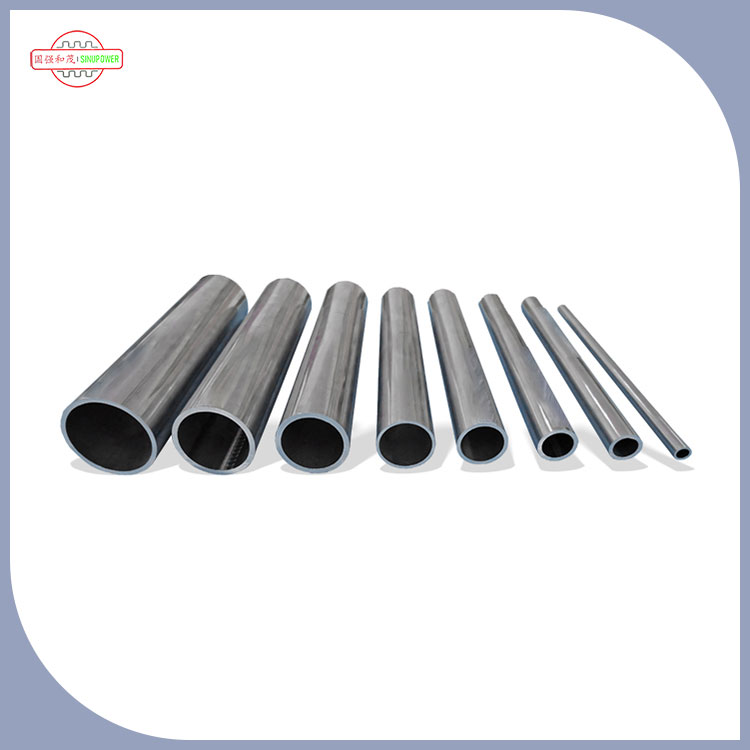
By producing components in various profiles—including folded, rectangular, flat, round, and custom-shaped tubes—thermal designers gain greater flexibility when optimizing cooling layouts.
The ability to customize dimensions, wall thicknesses, and flow channels allows engineers to address application-specific thermal challenges without compromising packaging efficiency.
This flexibility becomes particularly valuable as battery designs continue to diversify across electric vehicles, hybrid systems, and stationary energy storage projects.
Effective cooling solutions contribute benefits that extend beyond temperature reduction alone.
- Improved Charging Consistency: Stable temperatures help maintain predictable charging performance from start to finish.
- Reduced Cell Degradation: Lower thermal stress can contribute to slower capacity loss over the battery lifecycle.
- Better Energy Utilization: Consistent temperatures improve overall operating efficiency.
- Enhanced Safety Margins: Maintaining cells within recommended temperature ranges reduces the likelihood of thermal-related incidents.
- Greater System Reliability: Uniform cooling helps minimize performance variations between battery modules.
These advantages explain why thermal management has become a major focus area across the battery industry.
The next generation of electric mobility will likely push charging speeds even further.
Future developments may include:
- Ultra-fast charging networks
- Higher-capacity battery packs
- Advanced liquid cooling systems
- Smart thermal monitoring technologies
- Integrated cooling architectures
As these innovations emerge, cooling components will continue to play a central role in battery system design.
The industry's focus is shifting from simply managing heat to optimizing thermal performance as a competitive advantage.
Extreme fast charging places unprecedented thermal demands on modern battery systems, making effective heat management essential for performance, durability, and safety. Well-designed Battery Cooling Plate Tubes help transfer heat efficiently, maintain temperature uniformity, and support the growing demands of electric vehicles and energy storage applications. As charging technology advances, precision thermal management solutions developed by Sinupower Heat Transfer Tubes Changshu Ltd. and applied through advanced Cooling Plate Tubes will remain an important part of the industry's ongoing evolution.


