

Condenser downtime is rarely caused by one “big failure.” It’s usually death by a thousand cuts: performance loss from fouling, unexpected leaks, vibration wear, and maintenance windows that keep expanding because tubes are hard to clean or slow to replace. If you’re selecting tubing for a new condenser—or trying to stop recurring problems in an existing unit—the D-type Round Condenser Tube can be a practical upgrade path because it targets the real operational pain points: stable heat transfer, controllable pressure drop, better tolerance to imperfect water quality, and easier lifecycle management when paired with the right material and support practices.
This article breaks down what the “D-type” concept typically aims to improve, where it makes the most sense, what to verify before you buy, and how to avoid the classic mistakes that cause premature tube failure. You’ll also find a selection checklist, a troubleshooting table, and an FAQ you can hand to your maintenance team.
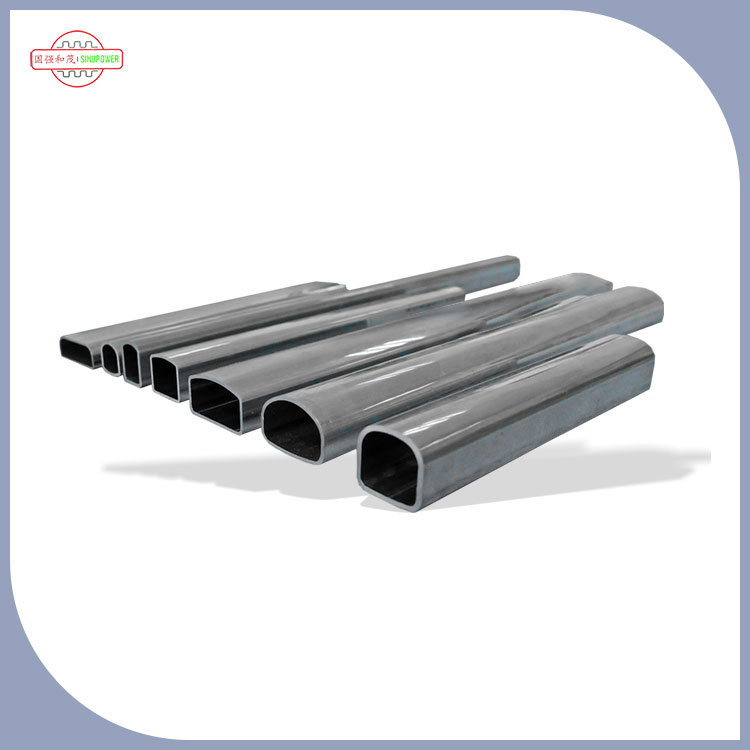
“Condenser tube” sounds simple: a tube, heat goes through it, done. In practice, a condenser is where small design compromises show up as daily operational headaches. A D-type Round Condenser Tube usually refers to condenser tubing that preserves a round external form factor (so it fits standard tube sheets and common rolling/expansion methods) while incorporating a D-profile feature set—often on the internal surface, external surface, or both—to improve heat transfer stability and operational resilience.
Different manufacturers implement “D-type” details in different ways, so the smartest approach is not to assume a single geometry. Instead, treat it as a category of enhanced condenser tubes designed to:
If you’ve been burned by a “high-efficiency” tube that performs great on day one but becomes a cleaning nightmare, you’re not alone. The goal is not maximum theoretical transfer; the goal is predictable, controllable performance in your real operating environment.
Most buyers don’t wake up excited to compare tube geometries. You care because something hurts—budget, uptime, efficiency targets, or all three. Here are the pain points that show up most often in condenser tube replacement projects:
A D-type Round Condenser Tube is most valuable when it helps you solve at least two of the above, not just boost a lab-number. The right tube choice should reduce total cost of ownership, not just look impressive on a datasheet.
When people talk about “enhanced” tubes, they often mean one thing: higher heat transfer coefficient. That’s only half the story. The better question is: can the tube maintain useful transfer without creating a pressure-drop penalty or turning into a fouling magnet?
A well-designed D-type Round Condenser Tube can help in a few practical ways:
One nuance: “enhanced” is not automatically “better.” If your cooling water is dirty and your plant hates shutdowns, a tube that achieves peak performance only when spotless may be a bad fit. The best tube for you is the one that stays within spec for the longest time between cleanings—without drama.
Before you commit to a D-type Round Condenser Tube, align procurement with engineering and maintenance. Use this checklist to keep everyone honest (and save yourself from “we should’ve asked that earlier” pain).
If you want a supplier who’s used to real-world condenser requirements, it helps to work with a manufacturer that focuses specifically on heat transfer tubing. Sinupower Heat Transfer Tubes Changshu Ltd. supports condenser tube projects where buyers need both performance consistency and documentation clarity, so your maintenance and quality teams aren’t left guessing.
Tube geometry can’t save you from the wrong material choice. Most condenser tube failures are chemistry + deposits + time. When evaluating a D-type Round Condenser Tube, talk material with the same seriousness as dimensions.
Practical tip: don’t oversimplify “bad water.” Ask for the actual chloride level range, biological load tendencies, and whether your treatment program is stable. If your water quality swings seasonally, prioritize resilience and cleanability, not just headline efficiency.
Even the best D-type Round Condenser Tube can be sabotaged by rushed installation or inconsistent maintenance. Here’s what tends to keep performance stable and failure rates down:
If your operation struggles with recurring fouling, consider pairing enhanced tubing with a disciplined monitoring routine. Performance stability is where enhanced tubes often pay for themselves—especially when the plant is busy and downtime is the enemy.
Use this table to connect your problem to a buying requirement. It’s designed to be practical—something you can paste into an internal purchasing checklist.
| Your Pain Point | Likely Root Cause | What to Verify on the Tube | How a D-type Round Condenser Tube Can Help |
|---|---|---|---|
| Heat transfer drops within months | Fouling + low turbulence + deposits | Enhancement design + cleanability + surface quality | Maintains more stable transfer at realistic operating conditions |
| Recurring tube leaks | Under-deposit corrosion, poor joint formation, material mismatch | Material grade, wall thickness tolerance, test records | Improves flow behavior and can reduce deposit “hot spots” when paired with correct alloy |
| High pumping cost / pressure drop concerns | Overly aggressive enhancement geometry | Pressure-drop data, recommended velocity range | Balanced designs can improve transfer without forcing extreme flow rates |
| Frequent cleaning shutdowns | Sticky deposits, poor service access, wrong cleaning method | Compatibility with mechanical brushing / ball cleaning | Designed to reduce deposit adhesion and keep performance steadier between cleanings |
Q1: Is a D-type Round Condenser Tube a “drop-in replacement” for standard smooth tubes?
A: Often, yes—because the external round format is typically designed to fit standard tube sheets and common installation methods. But you should still verify OD tolerance, wall thickness, expansion guidance, and whether your condenser’s flow/cleaning method matches the tube’s enhancement style.
Q2: Will an enhanced tube always increase pressure drop?
A: Not always. Some enhancement patterns are optimized to improve transfer with only a modest change in pressure drop. The key is to request operating-range guidance from the supplier and compare it to your actual water-side velocity and pumping limits.
Q3: What’s the biggest mistake buyers make when switching to a D-type Round Condenser Tube?
A: Buying based on a single performance claim without checking maintainability. If your team can’t clean it efficiently, you may lose the theoretical efficiency advantage quickly. Always align tube choice with your cleaning reality.
Q4: How many times should I mention operating conditions when requesting a quote?
A: More than you think. Include water type (fresh, brackish, seawater), temperature range, velocity target, chemical treatment approach, and any known contaminants. A tube that’s perfect in one water chemistry can be a headache in another.
Q5: Can D-type tubes help with vibration-related failures?
A: Tube geometry alone isn’t a vibration “cure,” but selecting the right tube characteristics (stiffness, wall thickness, support spacing compatibility) plus correct flow velocity management can reduce risk. If vibration is a known issue, treat it as a design-and-operation problem, not just a tube problem.
Q6: What should I ask a manufacturer to prove quality?
A: Ask for dimensional inspection capability, surface defect controls, and testing options such as eddy current testing and pressure testing (as applicable). Also request traceable documentation so you can match tube batches to future inspections and maintenance records.
A D-type Round Condenser Tube is worth considering when your goal is not just “better heat transfer,” but less drama: fewer performance surprises, fewer emergency shutdowns, and fewer weeks where maintenance becomes a firefight. The smartest projects start by naming the real pain point (fouling, leaks, downtime, pumping cost), then choosing a tube design and material that keep your condenser stable under your actual water quality and operating constraints.
If you’re evaluating specifications, materials, or replacement planning, Sinupower Heat Transfer Tubes Changshu Ltd. can support you with product guidance and manufacturing consistency so you can make a decision your operations team won’t regret six months later.
Ready to reduce condenser downtime and stabilize performance? contact us today and tell us your operating conditions—our team will help you match the right tube solution to your system.


