

In refrigeration, HVAC, and industrial heat exchange systems, the "condenser manifold" (usually referring to the main pipeline connecting the condenser to other core components of the system, or an integrated condenser piping assembly) is widely chosen because it can solve key pain points such as efficiency, reliability, and installation convenience during system operation, and adapt to the needs of "stable, efficient, and low maintenance" heat exchange systems in different scenarios. Specific analysis can be conducted from three dimensions: system performance, installation and operation, and scenario adaptation:
1、 Improve system heat exchange efficiency and reduce energy loss
The core function of a condenser is to release the heat absorbed by refrigerants (such as Freon and ammonia) in the refrigeration cycle to the outside world (air or cooling water), while the main pipe serves as the "main transport road" for refrigerants/heat exchange media, and its design directly affects heat exchange efficiency and energy consumption. This is the core logic for choosing it:
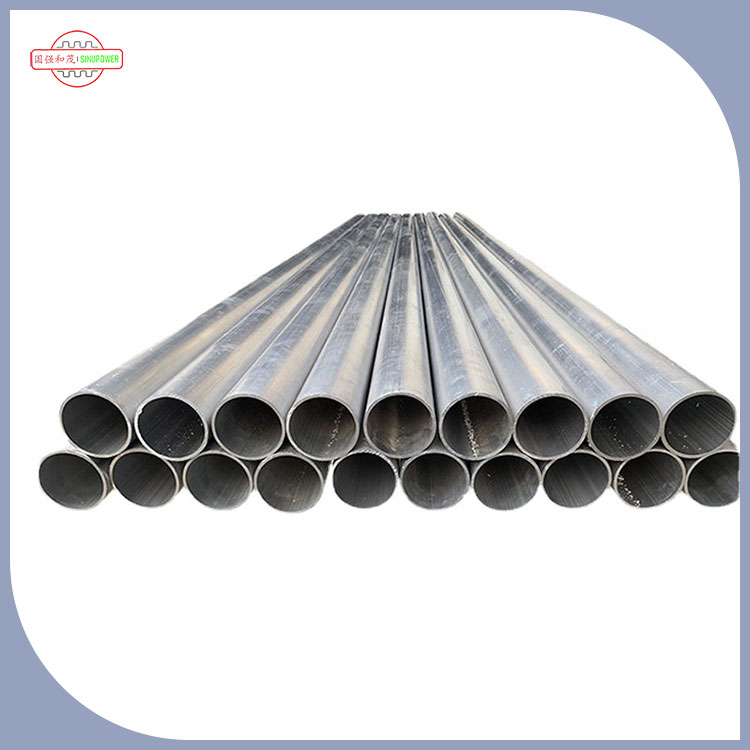
Optimize the flow characteristics of the medium: The professionally designed condenser manifold will reduce the pressure loss of the medium during transportation through "pipe diameter matching (to avoid excessive resistance caused by being too thin and medium retention caused by being too thick), channel smoothing (to reduce local eddies), and branch uniformity (to ensure balanced flow of the medium in each branch of the multi loop condenser)". For example, in the air-cooled condenser of central air conditioning, if the main pipe can achieve "even distribution of refrigerant to each condenser tube", it can avoid some pipelines from "insufficient flow leading to idle heat exchange" or "flow overload leading to overheating", thereby improving the overall heat exchange efficiency of the condenser by 10% -15% and indirectly reducing the energy consumption load of the compressor.
Reduce heat and cold losses: Industrial grade condenser manifolds usually integrate insulation layers (such as polyurethane, rock wool insulation sleeves) or use "anti condensation materials", especially in low-temperature conditions (such as cold storage condensers) or high-temperature environments (such as industrial kiln matched condensers), which can reduce the heat exchange between the medium inside the manifold and the external environment - for example, if the cold storage condenser manifold is not insulated, the infiltration of external heat will cause the refrigerant to vaporize prematurely, reducing the condensation effect; The insulated main pipe can control the cold and heat loss within 5%, ensuring stable cooling efficiency of the system.
2、 Reduce installation complexity and improve operational convenience
Traditional condenser pipelines require on-site cutting, welding, and assembly, which is not only time-consuming and labor-intensive, but also prone to leakage risks due to construction errors; The standardized condenser manifold (or integrated piping assembly) greatly simplifies the installation and maintenance process through "prefabrication and modularization" design
Prefabricated installation reduces on-site construction costs: In industrial scenarios (such as refrigeration systems in chemical and food processing), the condenser main pipe is mostly "factory prefabricated" - the main pipe, branch pipe, valve (such as globe valve, safety valve), pressure gauge interface and other components are welded in advance according to system parameters (such as medium flow rate, pressure, temperature). On site, only flanges or quick connectors are needed to connect with condenser, compressor, accumulator and other equipment, which can shorten installation time by more than 60% and avoid problems such as "welding slag residue blocking the pipeline" and "welding point leakage" that may occur during on-site welding.
Integrated design for easy troubleshooting and maintenance: The high-quality condenser manifold integrates maintenance components such as "inspection interface, flow sensor interface, and drain valve". For example, in the condenser manifold of an automotive air conditioner, refrigerant filling and pressure detection ports are reserved. During later maintenance, the system pressure can be detected and refrigerant can be replenished without disassembling the pipeline; The main pipe of industrial systems will also be equipped with "filters+detachable flanges" at easily clogged locations (such as when the medium contains impurities). When cleaning impurities, only the filter needs to be removed without disconnecting the entire pipeline, reducing maintenance downtime.
3、 Adapt to different scenario requirements to ensure system reliability
Different fields, such as household air conditioning, industrial refrigeration, and automotive air conditioning, have greatly different requirements for the working conditions of the condenser (such as temperature, pressure, corrosiveness of the medium, and vibration environment). Customized condenser manifolds can adapt to the scene characteristics through "material selection and structural strengthening", improving the overall reliability of the system:
Material adaptation, resistant to harsh working conditions:
The condenser manifold of household/commercial air conditioners often uses copper pipes or copper alloy pipes (with good thermal conductivity, corrosion resistance, and suitable for normal temperature conditions of refrigerant and air heat exchange);
The main pipe of industrial high-temperature environments (such as steel plant waste heat recovery condensers) will be made of stainless steel pipes (304/316L) to resist high-temperature oxidation and medium corrosion;
The condenser main pipe of the car air conditioner (which needs to withstand engine vibration and outdoor environment) adopts vibration resistant aluminum tube+flexible joint to avoid pipeline cracking caused by long-term vibration.
Structural strengthening to meet special needs:
The main pipe of high-pressure systems (such as condensers in ultra-low temperature cold storage, where the refrigerant pressure can reach 2MPa or more) will be reinforced with "thickened pipe walls and flange bolts" to prevent pipeline rupture under high pressure;
The condenser main installed outdoors will be coated with "UV resistant coating+rainproof cap" to prevent aging of the pipeline and rusting of the interface caused by sun and rain exposure.


