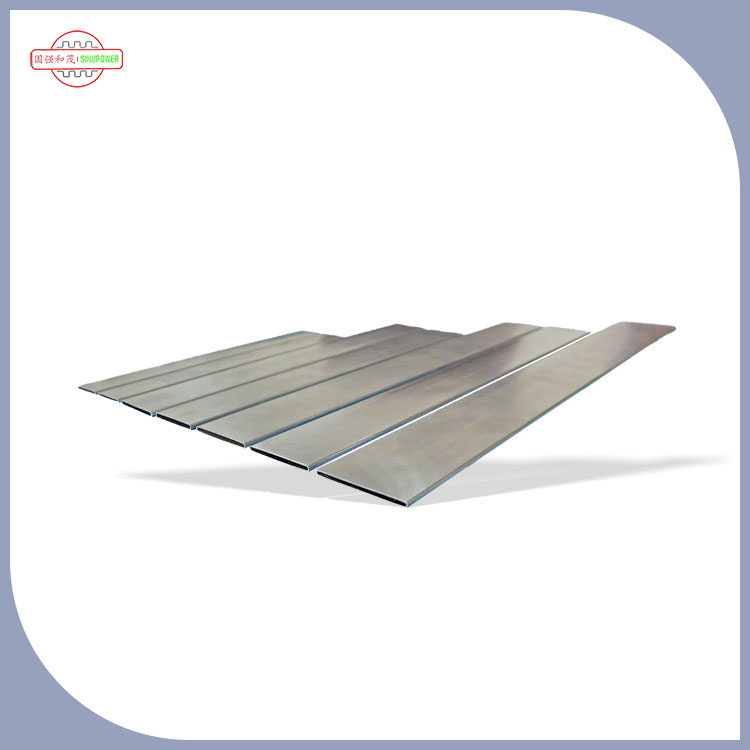
Abstract: Flat Oval Tubes are widely used in finned-tube heat exchangers because they help balance two things customers constantly fight with: strong heat transfer and low air-side resistance. This article breaks down what Flat Oval Tubes are, where they shine, the most common buyer pain points (pressure drop, noise, capacity limits, corrosion, inconsistent dimensions, joining issues), and a practical checklist to help you specify the right tube for your project. You’ll also find a comparison table, selection tips, and an FAQ so you can move from “not sure what to ask for” to “confident purchase decision.”
Flat Oval Tubes are heat-transfer tubes with an oval cross-section that has a “flatter” profile than a traditional round tube. In finned-tube heat exchangers, the tube is the highway for your working fluid (water, refrigerant, glycol, oil, etc.), while the fins help exchange heat with air. The tube shape influences how air flows around the coil, how fins attach, and how much heat you can move per unit area.
Think of Flat Oval Tubes as a practical geometry upgrade: they can reduce air-side resistance while maintaining strong heat exchange. That combination often translates into smaller coils, quieter fans, lower power consumption, or a wider operating margin when the unit gets dirty.
Many buyers first consider Flat Oval Tubes when they hit one of these constraints: limited installation space, strict energy targets, noise limits, or pressure-drop ceilings. If that sounds familiar, keep reading—this shape can be a very direct solution when specified correctly.
Buying heat-transfer tubing isn’t just about “tube size.” Most projects fail or get delayed because of hidden constraints: air-side pressure drop, fin fit, corrosion, joining compatibility, and dimensional consistency from batch to batch. Here’s how Flat Oval Tubes can address the most common pain points.
If you’ve ever had a coil that looked great on paper but missed performance in the field, it’s usually because one of the items above wasn’t defined tightly enough in the tube specification.
Flat Oval Tubes appear across a wide range of industries because the benefits (airflow efficiency, compactness, and stable fin integration) apply to many air-to-fluid heat exchangers.
In practice, the “right” choice depends on your priorities: minimum pressure drop, maximum capacity, corrosion resistance, or manufacturing simplicity. A good supplier will help you align tube geometry with those priorities rather than pushing a one-size-fits-all option.
| Decision Factor | Flat Oval Tubes | Round Tubes |
|---|---|---|
| Air-side pressure drop | Often lower at comparable coil layouts, supporting lower fan energy | Common baseline; may require higher fan power for the same duty |
| Compact packaging | Strong option when depth/space is limited | Simple geometry but may be bulkier for the same target performance |
| Noise control | Can help reduce required fan speed in many designs | Often needs more airflow effort to hit the same capacity |
| Fin-to-tube integration | Works well with fin designs optimized for stable contact area | Widely compatible; very common tooling availability |
| Specification sensitivity | More sensitive to flatness/ovality tolerances and consistency | Generally more forgiving in basic coil manufacturing |
| Best-fit projects | Energy-focused designs, tight packaging, pressure-drop constraints | Cost-driven designs, broad standardization, simpler supply chains |
The fastest way to avoid delays is to specify Flat Oval Tubes like an engineer and purchase them like a project manager: define what matters, lock the tolerances, and align the tube with your joining and testing method.
This is where an experienced manufacturer can save you weeks. For example, Sinupower Heat Transfer Tubes Changshu Ltd. focuses on heat-transfer tubing used in coil and exchanger applications, and projects typically move faster when you share your coil drawing, fin spec, and joining method up front.
Flat Oval Tubes can deliver excellent results, but only if the product is consistent. Here is a buyer-friendly checklist you can copy into your RFQ.
If you’ve been burned by “looks fine until assembly,” dimensional control and packaging protection are usually the two biggest upgrades you can demand.
These are the practical details that often get missed until the first production run:
Q1: Are Flat Oval Tubes always better than round tubes?
A: Not always. Flat Oval Tubes shine when air-side resistance, noise, or packaging is your limiting factor. Round tubes can be a great choice for highly standardized designs where simplicity and broad tooling compatibility are the priority.
Q2: What’s the biggest mistake buyers make when ordering Flat Oval Tubes?
A: Leaving out key tolerance details. If the RFQ doesn’t clearly define dimensional consistency (including flatness/ovality expectations), you risk fin fit problems, variable coil performance, and high scrap during assembly.
Q3: Do Flat Oval Tubes reduce operating costs?
A: They can. If the design reduces air-side pressure drop, you may achieve the same capacity with lower fan power or lower fan speed, which often translates to energy savings and reduced noise.
Q4: What information should I send a supplier for a fast quotation?
A: Share your tube dimensions, material preference, required lengths, expected annual volume, joining method (to headers), pressure/temperature range, and any corrosion or coating requirements. A simple coil drawing and fin spec can speed things up dramatically.
Q5: How do I verify quality without slowing down procurement?
A: Ask for a pre-production sample set, request dimensional inspection records, define your leak test method and acceptance criteria, and agree on packaging protection. This keeps QC focused and prevents surprises during assembly.
Flat Oval Tubes are not just a “different shape”—they’re a practical lever for improving airflow efficiency, compactness, and performance stability when your exchanger design is hitting real-world limits. The key is to treat the tube as part of a system: fins, headers, joining method, and environment all need to be considered together.
If you’re evaluating Flat Oval Tubes for an upcoming coil or heat exchanger project, share your drawing and operating conditions early so the supplier can recommend the most suitable tube specification and inspection plan. For product support and manufacturing capability details, contact us at Sinupower Heat Transfer Tubes Changshu Ltd. and let’s turn your constraints into a reliable, production-ready solution.