

Abstract
When equipment space is tight and heat transfer targets keep rising, round tubing is not always the best fit. Rectangular Tubes can unlock new layout options, improve packing density, and simplify integration in compact assemblies—but only if you specify them correctly. This article breaks down the practical questions buyers actually face: which material to choose, how to define dimensions and tolerances, how to prevent leakage and distortion during forming and joining, and how to verify quality before production. You’ll also find a selection checklist, a comparison table, and an FAQ to help you move from “idea” to a confident purchase specification.
Table of Contents
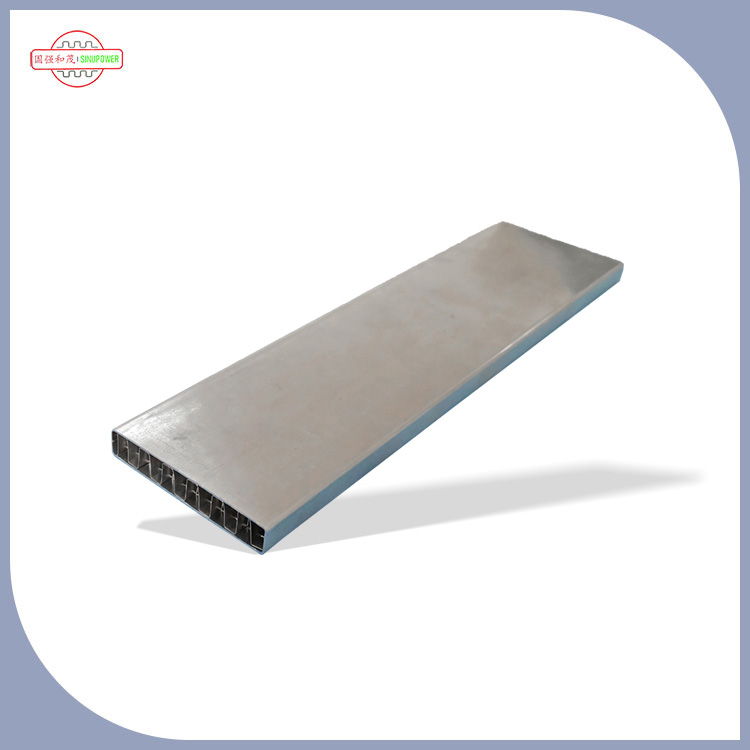
Buyers rarely switch to Rectangular Tubes just because they look different. The switch usually happens when one of these pain points becomes unavoidable:
That said, rectangular geometry also introduces risks you must manage: wall thinning at corners, distortion during welding, and tighter dimensional expectations if the tube must seal against flat surfaces. The good news is that most failures come from unclear specifications—not from the shape itself.
Rectangular Tubes show up in many heat transfer and industrial systems, especially when the assembly must be compact, robust, and easy to integrate.
Where issues usually begin
If you want Rectangular Tubes to perform predictably, treat the purchase like a functional component—not a generic commodity. A strong specification typically includes:
A practical tip: if the tube must mate with a gasket, plate, or header slot, include a simple drawing or a “go/no-go” gauge definition. That single step prevents most “it doesn’t fit” surprises.
Many buyers start by asking, “Which alloy is best?” The better question is: “Which material is best for my fluid, temperature, joining method, and maintenance reality?” For Rectangular Tubes, the right answer balances corrosion resistance, thermal performance, formability, and supply stability.
If you’re unsure, describe the full fluid story—startup, shutdown, cleaning, off-spec events—because corrosion problems often come from the “rare days,” not normal operation.
Rectangular profiles introduce forming realities that buyers don’t always anticipate. Here’s what to watch for when ordering Rectangular Tubes for heat transfer assemblies:
This is where experienced manufacturers matter. Many buyers work with partners like Sinupower Heat Transfer Tubes Changshu Ltd. because heat transfer tubing is less forgiving than general structural tubing—small deviations can cascade into leaks, pressure drop shifts, and assembly rework.
If your project has tight risk tolerance—think coolant leaks, downtime costs, or warranty exposure—build quality checks into the order instead of hoping problems don’t appear.
A practical purchasing move: request a small pre-production batch and perform a real assembly trial. It’s the fastest way to confirm that your Rectangular Tubes will behave in your actual fixtures and joining process.
| Decision Factor | Why It Matters | What to Specify |
|---|---|---|
| Fit in a compact footprint | Rectangular geometry can reduce wasted space and simplify packaging | Outside dimensions, straightness, twist, length tolerance |
| Sealing against flat surfaces | Leak risk rises if flatness or surface condition is uncontrolled | Flatness/twist limits, surface finish, end squareness, deburring |
| Pressure and durability | Corner thinning and distortion can reduce safety margin | Minimum wall thickness, corner radius, inspection plan |
| Corrosion resistance | Fluid chemistry and cleaning events drive real-world failure | Material grade, passivation/finish, compatibility notes |
| Manufacturability at scale | Prototype success doesn’t guarantee mass production stability | Lot strategy, documentation, sampling plan, trial batch |
Not always. Rectangular Tubes can be excellent when space constraints, packing density, or flat-side integration matter. Round tubes can be simpler for bending, standard fittings, and some manufacturing routes. The “better” choice depends on your assembly method, allowable pressure drop, and installation constraints.
Missing definitions for corner radius, twist, straightness, and end squareness are common troublemakers. If the tube must fit into a header slot or seal to a plate, those “secondary” details become primary requirements.
Start with a clear interface definition: slot size, insertion depth, and tolerance stack. Then control tube geometry (twist/straightness), end quality (deburring/squareness), and the joining method’s heat distortion. A small pre-production assembly trial is often the fastest validation.
If pressure or fatigue matters, ask for a minimum wall thickness requirement (not just nominal) and clarify how it will be checked. Corner behavior depends on forming approach and material.
It’s risky to assume so. Some fluids are stable in normal operation but become aggressive during cleaning, high-temperature events, or stagnation. Provide the full “fluid life story” when selecting material for Rectangular Tubes.
Consistency, documentation, and process control matter as much as price. You want a partner who understands dimensional stability, cleanliness expectations, and how joining methods affect final performance—especially when moving from prototype to volume production.
Rectangular Tubes can be a smart solution when your design needs compact packaging, predictable mounting, and efficient integration into modern heat transfer assemblies. The biggest difference between a smooth project and a painful one is simple: clear specifications and verification that matches how the tubes will actually be used.
If you’re planning a new design or troubleshooting an existing assembly, Sinupower Heat Transfer Tubes Changshu Ltd. can support you with practical guidance on dimensions, materials, and production readiness. Ready to move from requirements to a reliable supply plan? Contact us to discuss your application and get a solution tailored to your system.


