

Hourglass tubes for radiators are mostly used in the form of aluminum high-frequency welded pipes due to their high strength, deformation resistance, and good heat dissipation adaptability. They are mainly suitable for various scenarios that require efficient heat dissipation and vibration resistance, mainly concentrated in industries such as transportation, engineering machinery, and agricultural equipment. The specific details are as follows:
1.The automotive manufacturing industry: This is its most core application area, especially suitable for heavy-duty trucks, commercial vehicles and other vehicle models. For example, the radiators of Foton Ouman and other models use hourglass shaped high-frequency welded aluminum tubes, which can increase the welding circumference with the heat dissipation belt, enhance the overall strength of the radiator core, and reduce leakage problems caused by vibration during vehicle operation. Compared to traditional smooth sidewall tubes, it has stronger resistance to deformation and can avoid dimensional deviations caused by axial pressure generated by external forces during assembly. It is suitable for harsh driving conditions of commercial and heavy-duty vehicles and ensures stable operation of the engine cooling system. It can also be used for the water tank and heating system of ordinary passenger cars, balancing lightweight and reliable heat dissipation.
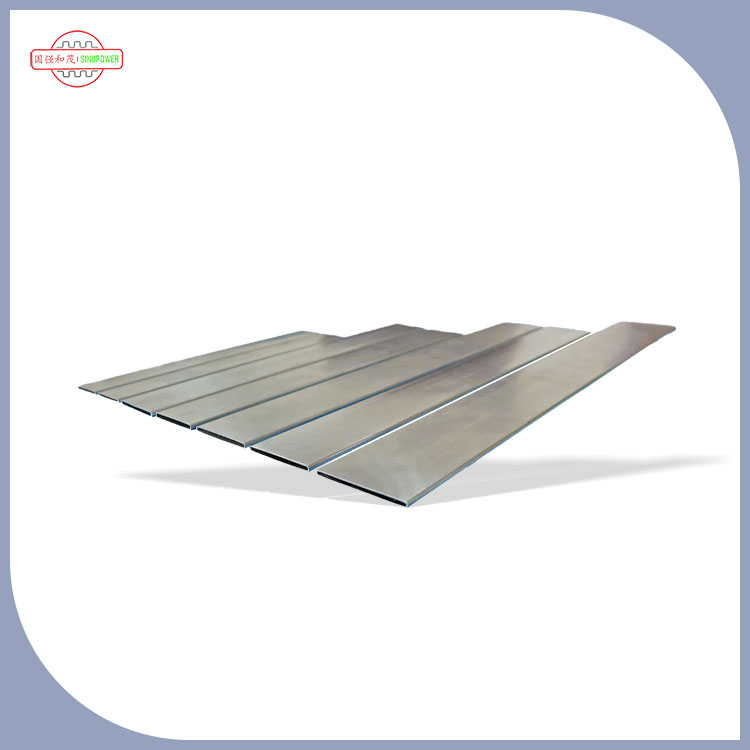
2.The construction machinery industry: Excavators, loaders, cranes and other construction machinery operate in complex environments, where the engine and hydraulic system continuously generate a large amount of heat during operation, and the vibration amplitude during equipment operation is significant. The anti torsion and anti deformation characteristics of hourglass tubes used in radiators can meet the radiator requirements of such equipment, avoiding damage or leakage of heat dissipation tubes caused by frequent vibrations, ensuring the continuous operation of hydraulic oil cooling, engine cooling and other systems, and thus maintaining the stable operation of construction machinery.
3.Agricultural equipment industry: Tractors, combine harvesters and other agricultural equipment often operate in complex road conditions in the fields, with long operation times and obvious vibrations. Their engine radiators need to have strong structural strength to cope with harsh working conditions. The advantage of high strength of hourglass tube can meet the requirements of anti vibration and anti damage of agricultural equipment radiators, prevent the deformation of heat dissipation tubes due to vibration from affecting the heat dissipation effect, avoid engine failure due to overheating, and ensure the continuity of agricultural production operations.
4.General Machinery and Power Generation Industry: On the one hand, some generator sets generate a large amount of waste heat during operation, and there is a certain degree of vibration during operation. The hourglass tube used for the radiator can be used for the cooling system of the generator set. With its stable structure and heat dissipation adaptability, it assists in the dissipation of waste heat and ensures the continuous and stable power generation of the unit; On the other hand, some general mechanical equipment such as large air compressors, industrial pumps, etc. can also use hourglass tubes for their cooling systems, which can adapt to the cooling and anti fatigue needs of the equipment under long-term operation, reducing downtime caused by cooling component failures.
5.In the field of HVAC and heat exchange assistance: In addition to the mobile heat dissipation scenarios of vehicles and machinery, it can also be used for heat exchange related components of commercial air conditioning and some industrial small-scale heat exchange equipment. For example, in the heat dissipation core of commercial air conditioners, the hourglass tube structure can adapt to the assembly requirements of the heat dissipation belt, improve heat exchange efficiency, and its structural strength can ensure the stability of air conditioning equipment during long-term operation, suitable for high-frequency operation of air conditioning in commercial places.


