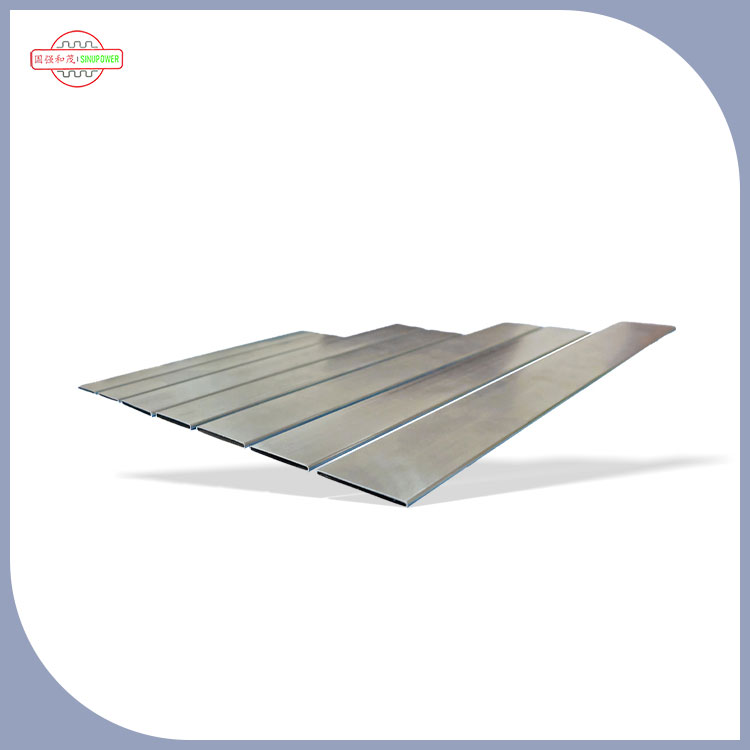
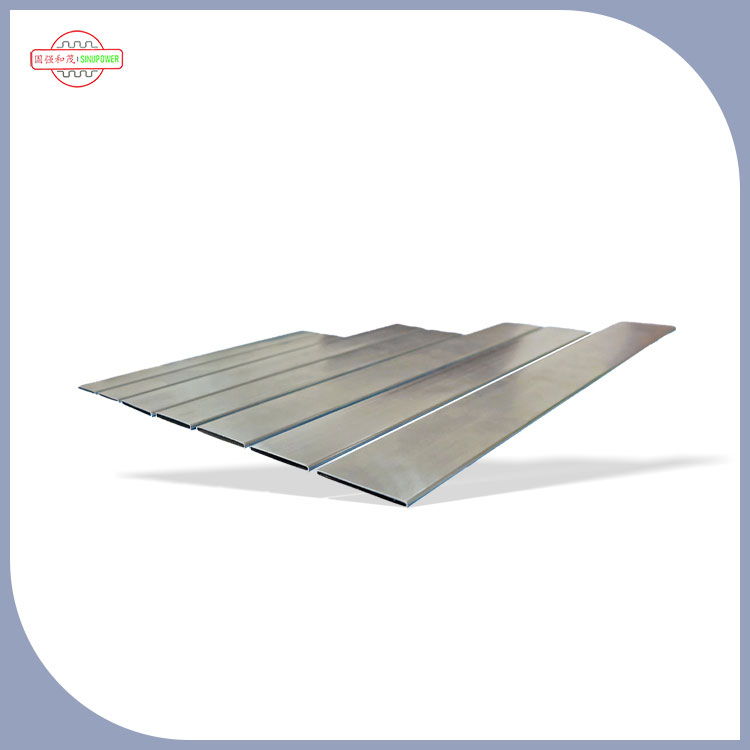
For automotive HVAC manufacturers, heater core reliability starts with tube seam integrity. Sinupower – a dedicated Manufacturer of precision aluminum thermal components – produces Laser Welded Leak Proof Connection Heater Core Tubing using high-power fiber laser technology. This process creates a continuous, homogeneous weld seam that eliminates the leak paths common in resistance-welded or mechanically seamed tubes. The B-type flattened profile maximizes surface area for heat transfer while the laser-welded seam ensures structural integrity under thermal cycling and coolant pressure. The result: heater cores that perform reliably across the vehicle's service life. As a leading heater core tubing manufacturer, Sinupower serves automotive HVAC suppliers globally with reliable, leak-proof solutions.
Why Laser Welding Matters for Heater Core Tubing
Sinupower's Laser Welded Leak Proof Connection Heater Core Tubing is manufactured using a process that delivers measurable advantages over conventional tube fabrication methods:
Zero-Leak Performance
-
Laser welding produces a continuous, homogeneous weld seam with no porosity or micro-cracks – eliminating the primary failure mode of heater cores.
-
Consistent weld penetration depth (typically 0.5–1.2mm) ensures the joint matches or exceeds the base material strength.
-
Helium leak testing on every production batch verifies leakage rates below 0.5 g/year per tube.
-
No post-weld filler material required, removing the risk of flux residue or braze alloy embrittlement.
Superior Heat Transfer Efficiency
-
The flattened B-type profile increases the surface area-to-volume ratio, enabling faster heat transfer from coolant to cabin air.
-
Smooth internal bore minimizes flow resistance and pressure drop across the heater core.
-
Uniform wall thickness (tolerance ±0.05mm) ensures consistent thermal conductivity across the entire tube length.
Enhanced Durability Under Thermal Cycling
-
Laser welding creates a metallurgical bond that withstands repeated thermal expansion and contraction without fatigue cracking.
-
Compatible with aluminum alloys AA3003 and AA3102, chosen for their excellent thermal conductivity (200–220 W/m·K) and formability.
-
Validated for 10,000+ thermal cycles from -40°C to +120°C with no weld degradation.
Clean, Flux-Free Manufacturing
-
Laser welding eliminates the need for flux or brazing paste, reducing contamination risk and simplifying downstream assembly.
-
No weld spatter or surface oxidation – tubes are ready for fin attachment and header brazing immediately after welding.
-
Consistent weld bead geometry allows for automated fin insertion and core stacking without alignment issues.
Laser Welded B-Type Tube vs. Conventional Seamed Tube
|
Comparison Factor
|
Laser Welded Tube
|
Conventional Seamed Tube
|
|
Weld Seam Integrity
|
Continuous, homogeneous seam – no porosity
|
Intermittent or mechanically folded seam
|
|
Leak Rate (Helium)
|
≤0.5 g/year
|
1–3 g/year (typical)
|
|
Heat-Affected Zone
|
Narrow (≤1.0mm) – minimal distortion
|
Wider (2–4mm) – potential distortion
|
|
Weld Strength
|
Matches or exceeds base material
|
Typically 70–85% of base material
|
|
Flux/Contamination
|
None – clean process
|
Flux residue may remain
|
|
Surface Finish
|
Smooth, oxidation-free
|
Weld marks, oxide formation
|
|
Post-Weld Treatment
|
Not required
|
Cleaning or coating may be needed
|
|
Production Speed
|
High – fully automated
|
Moderate – multiple forming steps
|
|
Cost Efficiency
|
Lower total cost (fewer rejects, no post-weld cleaning)
|
Higher reject rate, additional finishing
|
Manufacturing Process – From Coil to Finished Tube
The production of Laser Welded Leak Proof Connection Heater Core Tubing follows a tightly controlled six-step process from coil stock to finished tube:
Step 1 – Material Selection
-
Base materials: Aluminum alloys AA3003 and AA3102, selected for thermal conductivity, formability, and brazing compatibility.
-
Incoming coil stock tested for chemical composition and surface quality.
-
Material thickness range: 0.20mm to 0.60mm depending on application requirements.
Step 2 – Strip Forming
-
Aluminum strip is roll-formed into a B-type profile – the flattened, oval cross-section characteristic of heater core tubes.
-
Precision forming dies ensure consistent profile dimensions across the entire coil length.
-
In-line laser measurement monitors profile geometry to maintain tolerances.
Step 3 – Laser Welding
-
High-power fiber laser (1–3 kW) delivers focused energy to the tube seam, creating a keyhole weld with deep penetration and narrow width.
-
Shielding gas (argon or helium) protects the weld pool from oxidation.
-
Real-time weld monitoring tracks penetration depth, weld width, and porosity – automatically rejecting out-of-spec sections.
Step 4 – Weld Seam Annealing
-
Localized post-weld annealing relieves residual stress at the weld zone without affecting the base material temper.
-
Ensures the weld area has similar ductility and formability to the rest of the tube.
Step 5 – Sizing and Cut-to-Length
-
Tubes are calibrated to final dimensions through a series of sizing dies.
-
Cut to customer-specified lengths using precision sawing or shearing equipment.
-
Ends are deburred and prepared for fin insertion or header attachment.
Step 6 – 100% Leak Testing
-
Each tube undergoes helium mass spectrometry leak testing to verify leak-proof performance.
-
Acceptance criterion: ≤0.5 g/year leakage.
-
Tubes failing the test are automatically rejected – ensuring zero defective tubes leave the production line.
Application Focus – Heater Cores for Automotive HVAC
As a trusted automotive heater core tube supplier, Sinupower's products are deployed across multiple vehicle platforms:
Primary Applications
-
Passenger vehicle HVAC systems: Core component for cabin heating in sedans, SUVs, and light trucks.
-
Commercial vehicle climate control: Heavy-duty heater cores for trucks, buses, and off-highway equipment.
-
Electric vehicle thermal management: Integrated into EV heating systems (heat pump or resistive heating configurations).
-
HVAC air handling units: Used in building and industrial heating applications where compact, leak-proof heat exchangers are required.
Integration Points in the Heater Core Assembly
-
Tubes are inserted between fin stacks and expanded or brazed to form the core block.
-
Tube ends are connected to inlet/outlet headers via brazing or mechanical joining.
-
Coolant (engine coolant or EV heating fluid) flows through the tube interior, while air passes across the finned exterior.
-
Heat transfer occurs from the fluid through the tube wall and fins to the cabin air.
Compatibility with Assembly Processes
-
Our tubing is compatible with both controlled atmosphere brazing (CAB) and vacuum brazing processes.
-
The smooth, oxide-free weld seam requires no additional cleaning before brazing – reducing process steps and contamination risks.
-
Tube profiles and lengths can be customized to fit specific core geometries and vehicle platform requirements.
Quality Certifications and Manufacturing Standards
Sinupower's manufacturing processes operate under the following certified systems:
System Certifications
-
IATF 16949:2016 – Automotive quality management
-
ISO 9001:2015 – Quality management
-
ISO 14001:2015 – Environmental management
-
ISO 45001:2018 – Occupational health and safety
Testing and Inspection
-
In-line dimensional monitoring (laser micrometers)
-
Helium leak testing – 100% of tubes
-
Tensile and burst testing on weld samples
-
Microscopic inspection of weld cross-sections
-
Surface inspection using vision systems
Intellectual Property
-
2 invention patents – including a proprietary laser welding positioning system for B-type tubes.
-
15 design patents – covering unique tube profiles and heater core geometries.
-
16 utility model patents – focused on improvements in tube forming and welding processes.
Customization Capabilities for Heater Core Tubing
Dimensional Customization
-
Tube width: 12mm to 40mm (customer-specified)
-
Tube height: 1.5mm to 5.0mm (flattened profile)
-
Wall thickness: 0.20mm to 0.60mm
-
Length: 100mm to 2,000mm (cut-to-length per order)
-
Tolerance: ±0.05mm on critical dimensions
Alloy and Coating Options
-
AA3003: Standard alloy – good thermal conductivity and formability, corrosion-resistant.
-
AA3102: Higher strength variant – suitable for higher-pressure or more demanding applications.
-
Surface treatment: Optional zinc-flake coating or conversion coating for enhanced corrosion resistance.
End-Form Options
-
Square cut – standard for header insertion
-
Chamfered ends – for easier assembly and seal fitment
-
Expanded ends – for mechanical header connections
-
Custom end profiles – per customer drawing
Development Process
-
Requirement submission: Customer provides specifications, drawings, or performance targets.
-
Feasibility review: Engineering team evaluates material, profile, and welding parameters.
-
Tooling design: Forming and welding dies manufactured in-house.
-
Prototype run: Up to 100 pieces for customer validation – die cost only.
-
Production: Full-scale manufacturing with PPAP Level 3 available.
-
Delivery: Scheduled shipments with material certificates and inspection reports.
Quality Assurance – How We Ensure Reliable Weld Quality
Every batch of Laser Welded Leak Proof Connection Heater Core Tubing undergoes our rigorous quality control framework:
Raw Material Control
-
Aluminum coils sourced from ISO 14001-certified smelters with full material traceability.
-
Incoming inspection: chemical composition (OES), surface quality, and thickness verification.
In-Process Controls
-
Forming: Real-time dimension monitoring with feedback control to maintain profile accuracy.
-
Laser welding: Power, speed, and shielding gas flow continuously monitored. Weld seam quality verified via inline optical coherence tomography (OCT).
-
Annealing: Localized induction annealing with temperature monitoring to ensure consistent grain structure at the weld zone.
Final Inspection
-
Dimensional: OD, width, height, and wall thickness measured at 3 points per tube.
-
Leak test: Helium mass spectrometry – 100% of tubes, ≤0.5 g/year.
-
Weld inspection: Visual and microscopic verification of weld seam continuity.
-
Mechanical: Tensile and burst tests per heat-treatment batch.
These procedures ensure every shipment meets the rigorous quality requirements of automotive HVAC applications.
Sustainability and Environmental Compliance
Energy Efficiency
-
Laser welding consumes significantly less energy than traditional brazing furnace operations – reducing our carbon footprint.
-
Regenerative burner technology in annealing processes reduces gas consumption by 18%.
Recycling and Waste Reduction
-
98% material utilization – all aluminum scrap is segregated and returned to certified recyclers.
-
No flux or brazing paste is used in the welding process, eliminating hazardous waste streams.
Compliance
-
RoHS compliant – no restricted substances in materials or processes.
-
REACH compliant – all alloys and processing chemicals meet current EU environmental standards.
Frequently Asked Questions About Laser Welded Heater Core Tubing
Q: What is the advantage of laser welding over traditional resistance welding for heater core tubes? A: Laser welding produces a narrower heat-affected zone, deeper weld penetration, and a more consistent seam – resulting in lower leak rates, better fatigue resistance, and zero flux contamination.
Q: What alloys are available for this tubing? A: We offer AA3003 (standard) and AA3102 (higher strength). Custom alloys can be evaluated upon request.
Q: What is the standard lead time for production orders? A: Standard lead time is 20–25 working days for orders up to 50,000 pieces. Expedited production is available for urgent requirements.
Q: Do you provide leak test reports with each shipment? A: Yes. Every shipment includes helium leak test reports for each production batch, plus material certificates and dimensional inspection reports.
Q: Can you produce tubes with different cross-sections beyond the B-type profile? A: Yes. While B-type is our standard heater core profile, we can develop custom cross-sections (flat, oval, D-shaped) for specialized applications.
Q: What is the maximum tube length you can produce? A: Standard maximum length is 2,000mm. For longer requirements, please consult our engineering team – longer lengths may be possible depending on profile and alloy.
Q: What is the typical lead time for custom die development? A: Custom forming and welding dies are typically completed in 15–20 working days. Prototype tubes can be produced within 10 working days after die approval.
Sinupower delivers Laser Welded Leak Proof Connection Heater Core Tubing that enables automotive HVAC manufacturers to produce heater cores with superior reliability, consistent thermal performance, and lower total production cost. We invite OEMs, tier-one HVAC suppliers, and heater core manufacturers to contact us for samples, technical datasheets, or a collaborative design review.
Engineering review: Mr. Gao Qiang, Sinupower Founder – 20+ years in aluminum extrusion and thermal management, including prior leadership at Fortune 500 manufacturing companies.
Partner with Sinupower – leak-proof precision for every heater core.
Email: robert.gao@sinupower.com
Website: www.sinupower-transfertubes.com
Request samples or datasheets: Contact our sales team →
Hot Tags: Laser Welded Leak Proof Connection Heater Core Tubing, China, Manufacturers, Suppliers, Factory, Durable, Wholesale, Quality